How your kidneys work
Watch this video to see how filtration occurs in the kidneys.
The excretory system is the waste removal system of the body. It helps to keep our bodies clean and healthy. Use this resource to learn how the organs of the excretory system work together to support your body's functions.
The excretory system (or urinary system) plays a critical role in removing waste from the body and helping to maintain its internal balance.
The digestive system removes solid waste from digestion, turning food materials that we can't use into faeces. The respiratory system gets rid of waste gases like carbon dioxide when we breathe out. The excretory system is different because it filters the blood. This lets us remove any extra water, salts, and toxins from the body to keep it balanced and hydrated.
The path through which this happens is called the urinary tract.
A diagram of the urinary tract, including differences between the female and male bladders. On the left is a diagram of the urinary system within the body. The bones in the lower abdomen, pelvis and upper legs are shown. In the top right is a diagram of the female bladder. The two ureters are shown, along with the pelvic floor muscles that surround the urethra. In the bottom right is a diagram of the male bladder. It is very similar to the female bladder, but has a prostate gland that wraps around the upper part of the urethra.
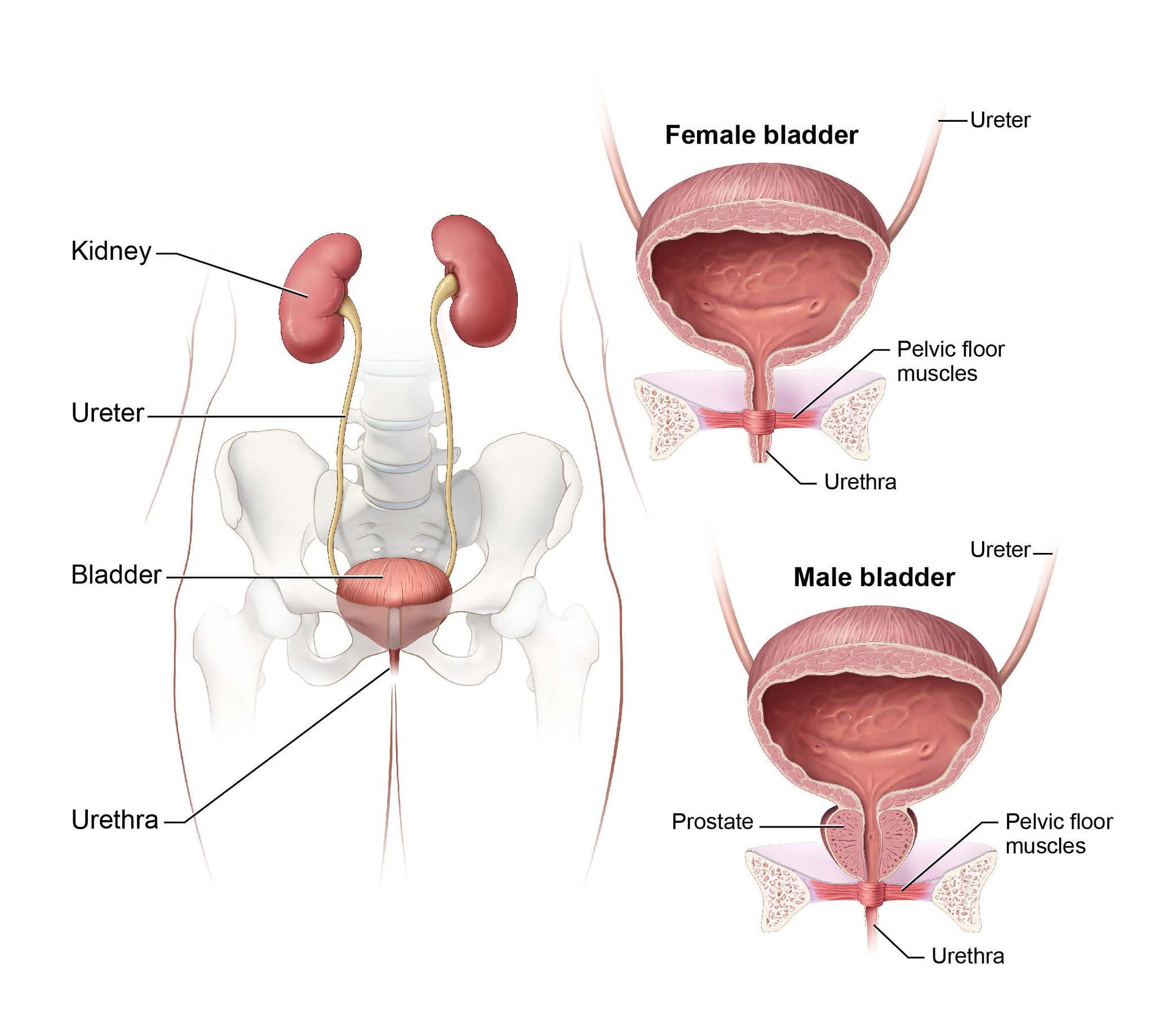
The urinary tract
Let's explore the parts of the urinary tract.
The kidneys are bean-shaped organs that filter waste and extra substances that we don't need from our blood. We have two kidneys. They are found on either side of our spine and each is about the size of a fist. Here is a 3D model of a kidney.
Kidney by cgmac on Sketchfab, licensed under CC BY 4.0
An interactive three-dimensional model of the kidney.
A cross-section of a kidney. The major blood vessels like the renal artery and vein, and their smaller arterioles, venules and capillaries can be seen. Nephrons are arranged into clusters called renal pyramids. In this particular kidney, there are 7 of them.
The kidneys contain tiny filtration units called nephrons, which consist of a glomerulus (a tiny network of capillaries) and tubule. These structures work together to filter blood, reabsorb necessary substances and excrete waste.
A labelled cross-section of a kidney.
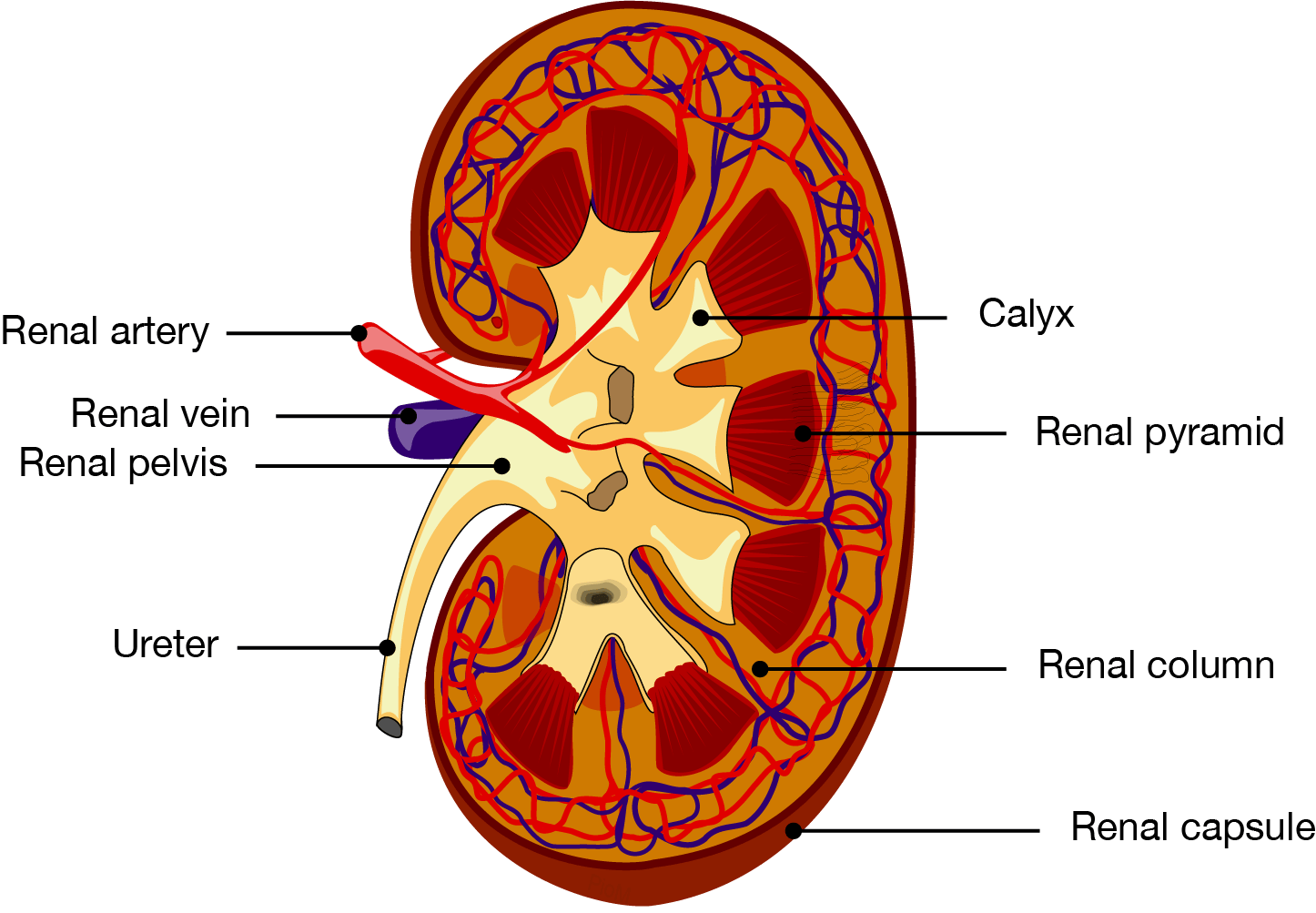
Kidney
Through the filtration process, our bodies make urine, a yellowish liquid waste. Urine can then be removed from the body by urination to get rid of toxins, extra minerals and fluid that the body doesn't need.
Watch this video to learn about how your kidneys work.
It's a hot day, and you've just downed several glasses of water, one after the other. Behind the sudden urge that follows are two bean-shaped organs that work as fine-tuned internal sensors. They balance the amount of fluid in your body, detect waste in your blood, and know when to release the vitamins, minerals, and hormones you need to stay alive. Say hello to your kidneys. The main role of these organs is to dispose of waste products and to turn them into urine. The body's eight liters of blood pass through the kidneys between 20 and 25 times each day, meaning that, together, these organs filter about 180 liters every 24 hours. The ingredients in your blood are constantly changing as you ingest food and drink, which explains why the kidneys need to be on permanent duty. Blood enters each kidney through arteries that branch and branch, until they form tiny vessels that entwine with special internal modules, called nephrons. In each kidney, 1 million of these nephrons form a powerful array of filters and sensors that carefully sift through the blood. This is where we see just how refined and accurate this internal sensing system is. To filter the blood, each nephron uses two powerful pieces of equipment: a blob-like structure called a glomerulus, and a long, stringy, straw-like tubule. The glomerulus works like a sieve, allowing only certain ingredients, such as vitamins and minerals, to pass into the tubule. Then, this vessel's job is to detect whether any of those ingredients are needed in the body. If so, they're reabsorbed in amounts that the body needs, so they can circulate in the blood again. But the blood doesn't only carry useful ingredients. It contains waste products, too. And the nephrons have to figure out what to do with them. The tubules sense compounds the body doesn't need, like urea, left over from the breakdown of proteins, and redirects them as urine out of the kidneys and through two long sewers called ureters. The tubes empty their contents into the bladder to be discharged, ridding your body of that waste once and for all. There's water in that urine, too. If the kidney detects too much of it in your blood, for instance, when you've chugged several glasses at once, it sends the extra liquid to the bladder to be removed. On the other hand, low water levels in the blood prompt the kidney to release some back into the blood stream, meaning that less water makes it into the urine. This is why urine appears yellower when you're less hydrated. By controlling water, your kidneys stabilize the body's fluid levels. But this fine balancing act isn't the kidney's only skill. These organs have the power to activate vitamin D to secrete a hormone called renin that raises blood pressure, and another hormone called erythropoietin, which increases red blood cell production. Without the kidneys, our bodily fluids would spiral out of control. Every time we ate, our blood would receive another load of unsifted ingredients. Soon, the buildup of waste would overload our systems and we'd expire. So each kidney not only keeps things running smoothly. It also keeps us alive. Lucky then that we have two of these magical beans.
Ureters are two thin tubes that connect the kidneys to the bladder. They transport urine from the kidneys, where it's produced, down to the bladder for storage.
The walls of the ureters are lined with smooth muscles that contract rhythmically, helping push urine smoothly toward the bladder. This process ensures that urine flows in one direction and reduces the risk of infections.
The bladder is a muscular sac found in the lower abdomen that stores urine until it's ready to be expelled from the body. Its flexible walls stretch to hold urine and contract when it's time to pee.
When we're asleep, the brain tells the kidneys to reabsorb more water back into our bloodstream, so that we don't have to wake up to urinate.
A healthy bladder can typically hold about two cups (or \(473\) millilitres) of urine. The bladder has sensors that tell the brain when it's full, giving you the urge to urinate.
The urethra is a tube that carries urine from the bladder out of the body during urination.
Muscles called sphincters help control the release of urine from the body.
Excretion is the process of removing waste from the body to make sure the internal environment remains balanced and healthy.
A labelled diagram of the nephron, showing the excretion process. The thin arrows show the direction of fluid movement.
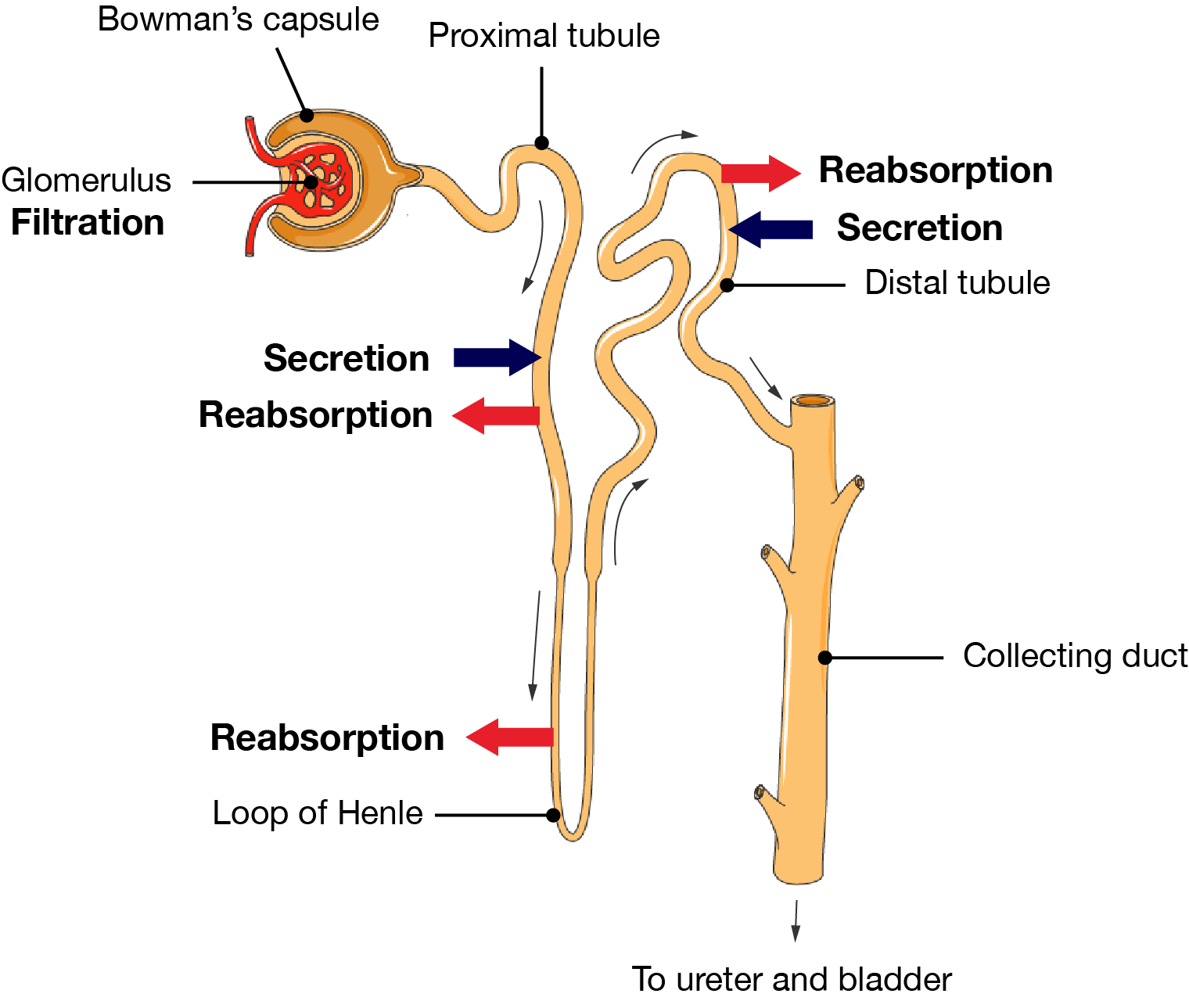
Excretion
This diagram gives you an overview of the process, but let's step through it in more detail. You can also watch the video under Further resources at the end of this page to see kidney filtration in action.
Important molecules like glucose, amino acids, and ions are reabsorbed into the bloodstream. This leaves only waste and excess substances in the fluid that will become urine.
This process primarily happens in the distal tubule of the nephron. It helps fine-tune the body's chemical balance and ensure that all unnecessary substances are removed efficiently. Secretion also plays a crucial role in maintaining pH balance and removing drugs or toxins from the body. Together with filtration and reabsorption, secretion completes the process of urine formation, readying waste for excretion.
The key components of the urinary tract and their functions are outlined in the table.
| Component | Function |
|---|---|
| Kidneys | Filter waste and excess substances from the blood, creating urine |
| Ureters | Provide a channel for urine to enter the bladder |
| Bladder | Stores urine until it is ready to be removed from the body |
| Urethra | Carries urine from the bladder out of the body |
See how well you understand the components of the excretory system and their roles with a quick quiz.
Read the scenario and use the information provided to answer the questions in the quiz.
Binh is a PhD student studying the effect of diet on urine composition. For his experiment, he recruited healthy student volunteers and had them follow specific diets (high protein, low sodium, or a standard diet) for one week each.
Urine samples were collected daily and concentrations of urea, creatinine and sodium were measured using spectrophotometry. The average results are shown in the table.
| Diet | Urea (mg/dL) | Creatinine (mg/dL) | Sodium (mg/dL) |
|---|---|---|---|
| High protein | \(30\) | \(25\) | \(40\) |
| Low sodium | \(20\) | \(15\) | \(20\) |
| Standard | \(25\) | \(20\) | \(35\) |


RMIT University acknowledges the people of the Woi wurrung and Boon wurrung language groups of the eastern Kulin Nation on whose unceded lands we conduct the business of the University. RMIT University respectfully acknowledges their Ancestors and Elders, past and present. RMIT also acknowledges the Traditional Custodians and their Ancestors of the lands and waters across Australia where we conduct our business - Artwork 'Sentient' by Hollie Johnson, Gunaikurnai and Monero Ngarigo.
More information